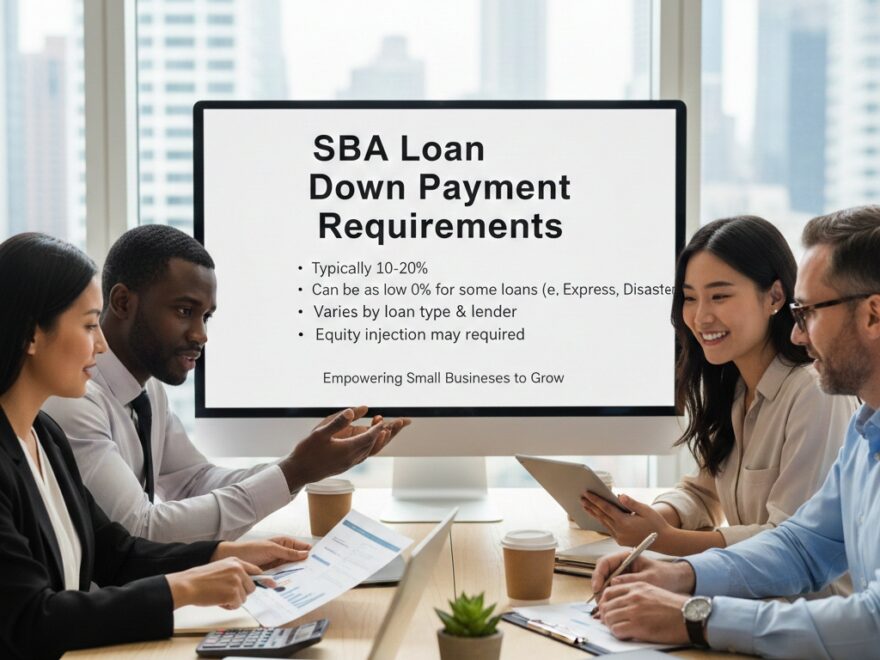
Access to funding is one of the most important factors in starting and growing a successful business. For many entrepreneurs, loans backed by the Small Business Administration (SBA) provide an affordable and flexible financing option. However, before applying, it is essential to understand SBA loan down payment requirements, as they directly impact your eligibility, approval chances, and overall financial planning.
Unlike traditional bank loans, SBA loans are partially guaranteed by the government, which reduces lender risk and makes financing more accessible. Even so, most SBA loans require some level of borrower investment, commonly referred to as a down payment or equity contribution. This requirement ensures that the borrower has a financial stake in the business and shares the risk with the lender.
In this comprehensive guide, you will learn everything you need to know about SBA loan down payment requirements, including how much you may need to pay, differences between loan programs, factors that affect equity contributions, and practical strategies to reduce upfront costs.
Key Takeaways
- SBA 504 loans typically require a 10%–20% down payment
- SBA 7(a) loans may require 0%–10% depending on borrower risk
- Startups and business acquisitions usually require higher equity contributions
- Multiple funding sources can be used to meet down payment requirements
- Strong financials, credit, and collateral can reduce upfront costs
- Proper planning improves approval chances and loan terms
Why Down Payments Matter for SBA Loan Down Payment Requirements
Down payments play a critical role in how lenders evaluate loan applications. They are not simply a formality. They are a key factor in determining the level of risk associated with a borrower.
From a lender’s perspective, a down payment provides several advantages:
- Risk Reduction: When borrowers invest their own money, lenders face less financial exposure
- Commitment Signal: A borrower who contributes capital is more likely to remain committed to the success of the business
- Improved Loan Performance: Loans with higher borrower equity tend to have lower default rates
- Flexibility in Approval: Strong equity contributions can compensate for weaker areas like credit or collateral
For borrowers, making a down payment can also lead to better loan terms, including lower interest rates, longer repayment periods, and higher approval odds.
Overview of SBA Loan Programs and Down Payment Requirements
The SBA does not directly provide loans. Instead, it guarantees a portion of loans issued by approved lenders. This guarantee encourages lenders to offer financing to small businesses that might not otherwise qualify.
The three main SBA loan programs include:
- SBA 7(a) Loans : Flexible, general-purpose loans
- SBA 504 Loans : Designed for real estate and equipment purchases
- SBA Microloans : Smaller loans for startups and early-stage businesses
Each program has different requirements, especially when it comes to down payments.
SBA 504 Loan Down Payment Requirements
The SBA 504 loan program is commonly used for purchasing fixed assets such as commercial real estate, large equipment, or long-term infrastructure investments.
Typical Down Payment
The standard down payment for an SBA 504 loan is:
- 10% of the total project cost
Loan Structure
The structure of a 504 loan is unique and involves three parties:
- A bank or private lender finances 50%
- A Certified Development Company (CDC) finances 40%
- The borrower contributes 10%
When Down Payments Increase
In some cases, borrowers are required to contribute more than the standard 10%. This typically happens when the loan involves higher risk.
You may need to provide 15%–20% down payment if:
- Your business is less than two years old
- You are purchasing a special-purpose property (e.g., hotels, gas stations, medical clinics)
- Your credit profile is weak
- The collateral is limited
Example Scenario
Imagine you are purchasing a commercial property worth $1,000,000:
- Standard case : Down payment = $100,000
- Startup or high-risk case : Down payment = $150,000–$200,000
SBA 7(a) Loan Down Payment Requirements
The SBA 7(a) loan program is the most widely used and flexible option for small businesses.
Typical Down Payment Range
- 0%–10%, depending on risk factors
Unlike the 504 loan, there is no fixed minimum down payment requirement. Instead, lenders evaluate each application individually.
Common Use Cases
SBA 7(a) loans can be used for:
- Business acquisitions
- Working capital
- Inventory purchases
- Equipment financing
- Debt refinancing
- Business expansion
Down Payment Scenarios
- Startups and acquisitions: Typically require around 10%
- Established businesses: May qualify for little or no down payment
- Higher-risk industries: May require increased equity
The flexibility of the 7(a) program makes it attractive, but it also means that requirements vary widely.
SBA Microloans and Disaster Loans
Microloans
SBA microloans are designed for small businesses and startups that need limited funding.
- Maximum loan amount: $50,000
- Down payment: Often not required
- Focus: Business plan, credit history, and repayment ability
Disaster Loans
SBA disaster loans are offered to businesses affected by natural disasters or economic disruptions.
- Typically no down payment required
- Collateral may be required for larger loan amounts.
SBA loan programs differ in down payment requirements, usage, loan limits, and flexibility.
The SBA 504 loan usually requires a 10%–20% down payment. It is best for real estate or equipment purchases. It offers up to $5.5 million in funding. It has moderate flexibility.
The SBA 7(a) loan offers more flexibility. It requires a 0%–10% down payment. It can be used for working capital, expansion, or acquisitions. It offers up to $5 million in funding.
SBA microloans usually require no down payment. They are ideal for startups and small funding needs. They offer loans up to $50,000. They also have moderate flexibility.
What Affects SBA Loan Down Payment Requirements
Several factors influence how much you will need to contribute.
1. Business Revenue and Cash Flow
Stable and consistent revenue reassures lenders that your business can handle loan repayments. Businesses with strong financial performance often receive better terms.
2. Credit Score
A higher credit score significantly improves your chances of qualifying for a lower down payment. Generally:
- 680 : Better terms
- Below 650 : Higher equity may be required
3. Collateral Availability
Assets such as real estate, equipment, or inventory can reduce the need for cash down payments.
4. Loan Purpose
Startups typically carry higher risk, which is why lenders often require a higher down payment. In contrast, business expansion projects are considered lower risk, so they usually qualify for lower down payment requirements.
5. Industry Risk
Some industries are considered riskier than others, which can increase equity requirements.
How Much Should You Expect to Put Down?
Based on typical scenarios, borrowers should prepare for:
- SBA 504 Loans: Typically require a 10%–20% down payment, depending on the project and borrower profile.
- SBA 7(a) Loans: Usually need a 0%–10% down payment, making them more flexible for general business financing.
- Microloans: Often come with minimal or no down payment, making them ideal for startups and small funding needs.
Planning ahead ensures you are financially prepared before applying.
Practical Ways to Fund Your Down Payment
If you do not have sufficient cash, there are several legitimate ways to meet SBA equity requirements.
1. Seller Financing
The seller may agree to finance part of the purchase price, reducing your upfront cost.
2. ROBS (Retirement Funds)
A Rollover for Business Startups allows you to use retirement funds without penalties if structured correctly.
3. Investors or Partners
You can bring in investors who contribute capital in exchange for ownership.
4. Personal Savings
Using personal funds is the most straightforward and commonly accepted method.
5. Home Equity
Borrowing against your property can provide additional funding.
6. Asset Liquidation
Selling unused business assets can help generate capital.
7. Blended Funding Strategy
Many borrowers combine multiple funding sources to meet requirements.
Real-World Example
A business owner wanted to purchase a second restaurant location valued at $450,000. The lender required a 10% down payment of $45,000.
To meet this requirement, the borrower used:
- Personal savings
- Seller financing
- Proceeds from selling unused equipment
This combination allowed the borrower to secure funding without taking on additional debt.
Costs Beyond the Down Payment
Many borrowers focus only on the down payment and overlook additional expenses.
You should also budget for:
- Closing costs
- Legal and administrative fees
- Insurance
- Working capital
- Equipment installation and setup
Failing to plan for these costs can lead to financial strain after loan approval.
Tips to Reduce SBA Loan Down Payment Requirements
There are several ways to minimize your required equity contribution.
- Improve your credit score before applying
- Maintain strong and consistent business revenue
- Provide collateral to reduce lender risk
- Choose the right SBA loan program
- Work with experienced SBA lenders
- Prepare a detailed business plan
The stronger your application, the more flexibility lenders may offer.
Common Mistakes in SBA Loan Down Payment Requirements
Avoid these common mistakes:
- Using undisclosed borrowed funds
- Submitting incomplete or inaccurate documentation
- Overvaluing business or assets
- Applying without proper financial preparation
Avoiding these issues can significantly speed up approval and reduce complications.
Latest SBA Loan Trends
SBA lending trends indicate a shift toward more cautious lending practices. Due to economic uncertainty, lenders are placing greater emphasis on creditworthiness, business stability, and cash flow.
Startups and high-risk industries are more likely to face stricter down payment requirements, recent changes are also affecting SBA loan down payment requirements for borrowers.
Additionally, lenders are increasingly requiring detailed financial projections and documentation. Borrowers who prepare thoroughly and demonstrate financial stability are more likely to secure favorable loan terms.
FAQs
Do SBA loan down payment requirements always require a down payment?
No, some SBA loans, especially certain 7(a) loans and microloans, may not require a down payment.
Can assets be used instead of cash?
Yes, assets can count toward equity if they are properly valued and approved.
Can I use borrowed funds for a down payment?
Yes, but only if they are disclosed and structured according to SBA guidelines.
Does a higher down payment improve approval chances?
Yes, a higher down payment reduces lender risk and often results in better loan terms.
Conclusion
Understanding SBA loan down payment requirements helps you make better financial decisions. While requirements vary depending on the loan program and risk factors, most borrowers can expect to contribute between 0% and 20% of the total loan amount.
By preparing early, improving your financial profile, and exploring multiple funding strategies, you can reduce your upfront costs and increase your chances of approval. SBA loans remain one of the most powerful tools for small business growth, offering flexibility, affordability, and long-term support.
